Showing posts with label teachers. Show all posts

Monday, 13 January 2014

Brand New Attitude for a Brand New Year!!

As educators, sometimes it can get a little overwhelming at the beginning of the year with new students, new teaching materials and maybe a new environment. However, having help is always a life-saver. Sometimes you feel alone with no one to turn to for advice and tips. Fear no more!

With the convenience of the world of internet, you can easily have get new ideas, tips and tricks from the expert or experienced teachers and educators. We, here at Little Scientists would like to help you get through the New Year with ease. We looked around in the internet for tips and tricks and we found this website really helpful!

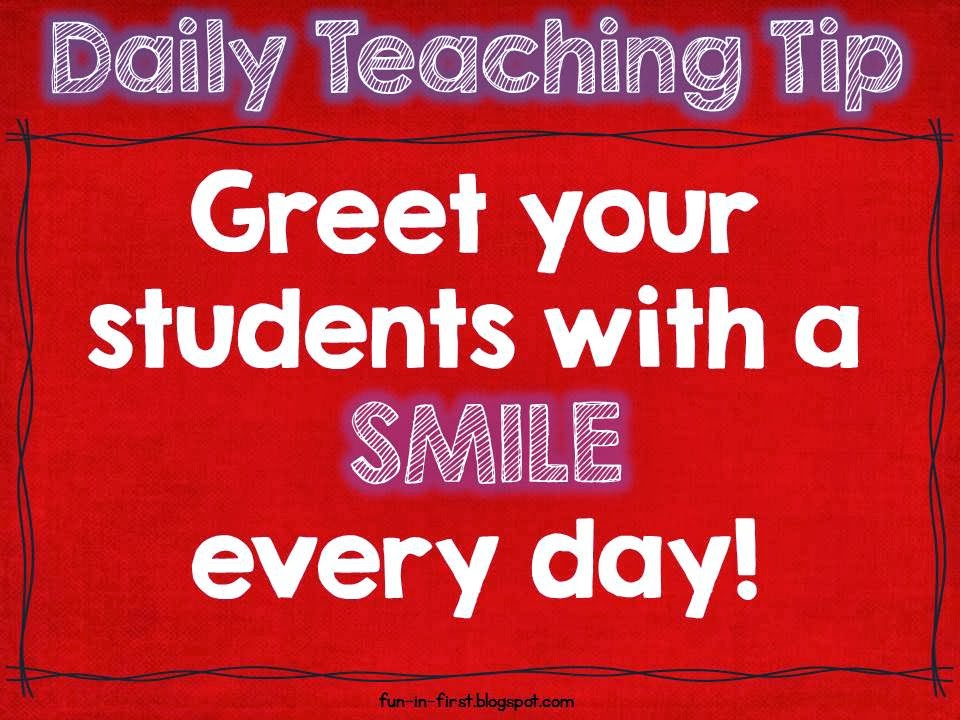
Here are 10 of the best daily teaching tips from the website Fun In First by Jodi Southard:


May your 2014 be free of obstacles & screaming kids and more of happy smiles & hugs!

~May

Monday, 2 December 2013

10 Kindergarten Readiness Skills Your Child Needs

What do teachers really want your child to know on the first day of kindergarten? Kindergarten is changing and parents are feeling pressure to prepare their children for their first school experience. But while some may fret that reading and doing addition are prerequisites for kindergarten these days, your child likely possesses many of the skills they needs to be successful as they begins school.
“Some of the things I would like my kids to know coming into kindergarten are alphabet and some sounds, recognition of numbers 1-10, be able to write and recognize their name” says kindergarten teacher. “It is also important for them to be able to follow directions and to have the ability to express their feelings.”
Here are the 10 kindergarten readiness skills to focus on as you work with your child. Don't be concerned if they does not have them all down before the first day of kindergarten, as they will continue to work on them throughout the year. Try a few activities listed for the skills your child might need to work on a bit more before they starts school.

1. Writing
·    Help your child practice writing letters, especially the letters in their name.
·    Teach your child how to write their name with an uppercase first letter and the remaining letters in lowercase.
·     Write in finger paint or sand writing when go to beach side to make practicing more fun and multisensory.

2. Letter Recognition
·    Play games to help your child recognize some letters of the alphabet.
·    Play hide and seek with refrigerator magnets.
·    Rather than drilling your child with flashcards, use them to play a game of alphabet go fish.

3. Recognice Sounds
·   Make your child aware of the sound.
·   Play guessing sound game with them; make them guess the sound of animals, vehicles or musical instrument.

4. Number Recognition and Counting
·   Count throughout the day (for example, the crackers they are eating for snack)
·   Point out numbers you see in your environment and have your child name them (for example, the numbers found on menu or street signs).

5. Colour
·   If your child is having trouble recognizing certain colors, you might add a little food coloring to cookie dough, milk or vanilla pudding to emphasize those colors.
·   Play games in which your child finds objects of particular colors around the house or in the neighborhood as you drive.

6. Shape
·    Help your child recognize basic shapes such as square and triangle by showing them how to draw on paper.
·    Play with play dough and cut out shapes, let your kids sort the shape into group.

7. Fine Motor Skills
·    Give your child several different writing options (colored pencils, crayons or markers) to help keep her interested in writing and drawing.
·    Playing with play dough is a fun way to strengthen the muscles of the hand that will be used for writing.

8. Reading Readiness
·   Run your finger under the words as you read to your child to help her learn that words go from left to right and top to bottom.
·   Read their favorite storybook

9. Attention and Following Directions
·   Read lots of stories with your child and work up to reading longer chapter books, one chapter each night or as long as she remains interested and focused.
·    Give your child two and three step directions. For example: "put on your pajamas, brush your teeth and pick a book to read."
·    Play Simon Says with two or three step directions. For example: "Simon Says jump up and down and shout hooray."

10. Social Skills
·    Give your children opportunities to interact with other children in preschool, social groups or play dates.
·    Teach your child how to express their feelings if they do not like something.
·     Role-play different situations their might experience on the playground or at school. Help them find solutions for typical problems they might encounter.

Chances are you're already practicing many of these skills your child will need for kindergarten. Remember to keep it fun and don’t make it stressful for you or your child. With just a little fun practice, your child will be prepared for her elementary school debut!
We play, We Explore, We Learn! 
                                                                            - LittleScientists

Website: www.LittleScientistS.com

Tuesday, 29 October 2013

Home Science Idea: Fingerprint Lights

Any plan to spend your holiday with your kids this Diwali holiday? Here is an Idea that is suitable for all ages. 

Diwali being the festival of light. 
Little Scientists would like to celebrate this special day by integrate science in this festival of light.

Even if your kids are not from a background that celebrates Diwali there are still lots of kid's crafts and activities that you can do to increase their understanding about light. Especially light is such important things in our daily life. 

You can teach about:
1. 
Colour
2. The importance of light in our daily life
3. Things that give out light
4. Fingerprint 
5. Each of us has unique fingerprints


Materials need:
a. light template  click to download 
b. water colour & brush or colour stamp pad
c. wipes for finger in between colour
1. Print out the light template.
2. Paint their cute little thumb with water colour or colour stamp pad. 
3. Stamp their thumb print on the light template follow the wire and light bulb holder.

4. Let it dry and frame it up.


Source from Internet

This artwork will be a memorable piece for them in future. Here are the extended idea:
Fingerprint Idea, source from pinterest.com
Get our DIY science experiment kits for your child this coming holiday. 
visit Little Scientists Online shop, www.LittleScientistS.com/shop 
It gonna be a fun filled holiday for them with these science toys.

We play, We Explore, We Learn! 
                                                                            - LittleScientists

Website: www.LittleScientistS.com


Monday, 30 September 2013

Scared? Don't be! We are here to help.....


Loads of parents and teachers have a fear of teaching science to toddlers and pre-schoolers because of the fear that it is too difficult. However, it is easy when you are able to relate to to things that is surrounds them.  Here are some ideas as to how you can do it! 

Relate it to daily life
Simple things like cooking, playing are somehow related to science. For example, when we bake a cake we turn a liquid batter in to a solid cake.  Or even when an ice melts into liquid and how we boil it it will turn into a steam. 

Things that can be seen and not too abstract are the best for them to grasp certain concepts. There are resources that you can find online that can help you with this.  We have posted a few fun and exciting things  that you can do with your child at home that is easily done at home or in the classroom.

Have toys that are science related
There are many toys available out there that are science related nowadays and you know kids love to play. So why not let them learn while they play??  However, loads of DIY science kits out there may not be as suitable for younger kids but if parents or teachers can do it together, it is really a very effective way to get kids to explore. We, here at Little Scientists also have a online shop where you can browse for fun science toys for your kids or for Christmas/ Birthday gifts.

Visit science centres and factories
Science centres are places where kids can learn about many things, from the galaxy to bugs, from cars to music. You might even find something that really interest your child so that you can tap on it at home or at the classroom. It is definitely easier for them to "get the idea" when they are interested in something.

Visiting places like factories this is always fun and educational. Exploring how things are made and work always triggers the curiousity of young children. They may not get it at first but sure would like to explore more. Schools trips to chocolate factory, ice-cream factory is definitely a winner because the children know that they would be given some treats at the end!

Have science experiments at home
Easy science experiments that are age appropriate are now everywhere on the internet and usually uses things that can be found at home or can be bought cheaply. Resources online are endless, from video tutorials or printable instructions can definitely ease your worries. Little Scientists also has some simple experiment videos online at our Youtube channel. Do feel free to experiment with them and we will be very happy to see your exploration with your child. Put it up on Facebook and tag us!

These are just a few ideas for helping you overcome your fears of teaching science to the little ones. We do hope these tips are helpful and we would love for you to share your experiences.  Have fun and enjoy, and remember, a little mess won't kill! :)
~May

Monday, 1 July 2013

Get Organized!

Teachers sometimes run out of ideas in ways to make teaching fun and exciting, even more so in organization in the classrooms. There are many websites out there that helps teachers with organization, whether in class or with teaching itself. Looking at some of the tips and tricks shown below makes me want to try them out even though I am not a teacher!
Teach Bake Love: Pencil Problems-Teaching Tip Linky Party
1. Get 2 empty bottles and label them as shown above. This will definitely help you when it comes to sorting out a bunch of pencils in the basket of all your colouring pencils! Let your children know once their pencils are blunt, put them in the bottle that is labelled "not sharpened" so that you will know that you'll need to sharpen it after class! At the same time, they get to learn opposites! :)


2. Have small boxes to organize your materials according to the days. It will definitely help you make sure the things your will need for that day are prepared and that you do not miss out anything! You can even do this for your children by swapping it with their workbooks needed for that day! Definitely a time-saver!!

Glue sponge

3. Tired of glue mess? Pour some glue over a sponge in an air tight container and this will minimize mess as the child will dab whatever he/she wants on the sponge and catastrophe will be avoided! Close the lid tight when you are done and you can use it the next round without the glue drying out! Saves a ton of glue too!

Simple tips and tricks like the ones above are only some of the many many ways your can organize your class for a better learning environment! Having a clean and organized area for the children to work with will definitely help make learning all the more exciting and fun! Do you have any tips and tricks that you would like to share? 

I do hope that these are helpful in making teaching fun and less stressful for everyone!

~May
Related Posts Plugin for WordPress, Blogger...